


Air Stream Temperature Forcing Systems for Semiconductor Testing
Air Stream Temperature Forcing Systems are widely used in semiconductor validation labs, electronics reliability testing, and production testing environments where rapid temperature transitions and localized thermal control are required.
High Airflow | -70°C to +225°C | Advanced Nozzle & Flexible Duct

Air Stream Temperature Forcing Systems, are specialized thermal test systems used to rapidly expose electronic components to controlled temperature conditions without the need for a full environmental chamber.
Overview
CME’s Air Stream Units deliver precise hot and cold air streams directly onto electronic devices, enabling high-speed temperature testing for:
- Semiconductor devices
- Printed circuit boards (PCBs)
- Sensors
- Automotive electronics
- RF modules
- power electronics
Semiconductor validation labs
These systems are widely used in semiconductor validation labs, electronics reliability testing, and production testing environments where rapid temperature transitions and localized thermal control are required.
Unlike conventional climatic chambers that control the entire test volume, air stream systems deliver high-velocity conditioned air precisely to the device under test (DUT). This approach significantly reduces thermal mass and enables extremely fast temperature ramp rates, improving throughput in electronics testing.
CME’s air stream technology combines
CME’s air stream technology combines high-capacity refrigeration, precision temperature control, and advanced airflow engineering to achieve reliable and repeatable thermal testing conditions across semiconductor and electronics applications.
Key Capabilities
CME Air Stream Units are designed for high-speed temperature forcing applications in electronics and semiconductor testing environments.
Wide Temperature Range
Typical operating range:
-70°C to +225°C
This enables testing across the full thermal envelope required for semiconductor qualification and reliability programs.
Key Engineering Features
CME Air Stream Units incorporate engineering features specifically designed for semiconductor and electronics testing environments.
Precision Airflow Delivery System
Advanced nozzle and duct design ensures:
- directed airflow onto DUT
- minimal turbulence
- accurate thermal transfer
- repeatable test conditions
Supported Standards
CME Air Stream Units support environmental conditions required for testing under international electronics and automotive standards including:
- IEC 60068 – Environmental testing
- JEDEC JESD22 – Semiconductor reliability testing
- ISO 16750 – Road vehicles environmental conditions
- MIL-STD-810 – Environmental engineering testing
- AEC-Q100 / Q200 – Automotive semiconductor qualification
Rapid Temperature Transitions
Air stream technology enables extremely fast thermal response.
Typical capabilities include:
- Rapid temperature ramp rates
- Fast DUT temperature stabilization
- Minimal thermal overshoot
This makes air stream units ideal for production test environments and accelerated reliability testing.
Directed Airflow Testing
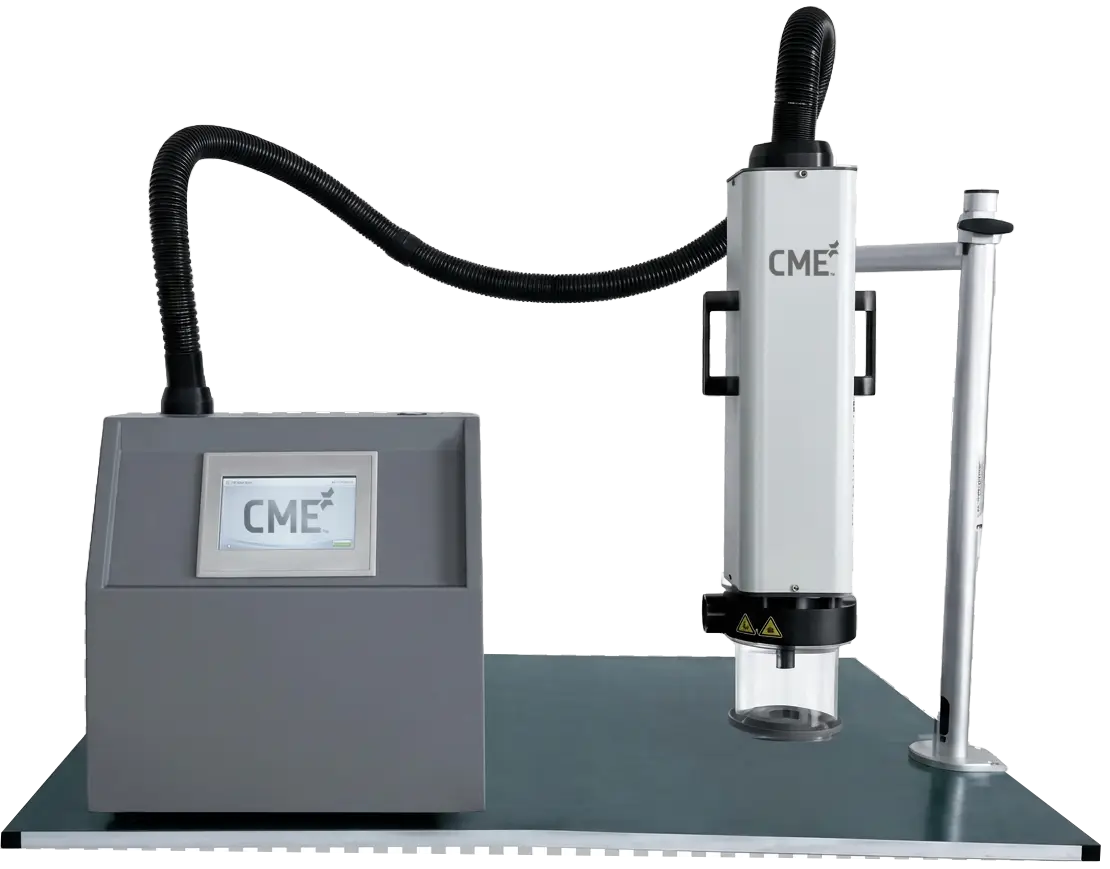
A flexible thermal delivery arm or nozzle directs conditioned air precisely onto the device under test.
Benefits include:
- Localized thermal exposure
- Minimal heat loss
- High repeatability
- Efficient energy usage
This is particularly useful when testing IC packages, PCBs, sensors, and small electronic assemblies.
Define Your Environmental Test Requirement
Speak with CME engineers to configure a reach-in environmental test chamber based on temperature, humidity, standards, and test specimen.
| Models | Description | ||||
|---|---|---|---|---|---|
|
ASFS418A225 |
Floor Standing 4-18SCFM Ambient to 225℃ |
||||
|
ASFS41870225 |
Floor Standing 4-18SCFM -70℃ to 225℃ |
||||
|
ASFS41880225 |
Floor Standing 4-18SCFM -80℃ to 225℃ |
||||
|
ASFS41890225 |
Floor Standing 4-18SCFM -90℃ to 225℃ |
||||
|
ASBT31025225 |
Benchtop 3-10SCFM -25℃ to 225℃ |
||||
|
ASBT31055225 |
Benchtop 3-10SCFM -55℃ to 225℃ |
||||
High Airflow Capacity
CME Air Stream Units are engineered with high-capacity airflow systems that ensure uniform heat transfer between the air stream and the DUT.
Advanced airflow design improves:
- thermal stability
- device temperature uniformity
- repeatability of test conditions
High Heat Load Handling
Electronic devices under test often generate heat during operation.
CME systems are designed to manage active DUT heat loads, ensuring stable test conditions even during high-power testing of:
- power electronics
- automotive ECUs
- RF power modules
Applications
Air Stream Units are widely used across the electronics and semiconductor industries for temperature validation and reliability testing.
Semiconductor Device Testing
Used for testing:
- microcontrollers
- memory devices
- processors
- analog ICs
- RF chips
Air stream systems enable temperature forcing during functional testing using automated test equipment (ATE).
Printed Circuit Board Testing
Thermal validation of PCBs and assemblies including:
- automotive control units
- industrial electronics
- embedded systems
- communication modules
Automotive Electronics Testing
Air stream systems support validation of electronics used in:
- engine control units (ECUs)
- battery management systems
- power electronics
- sensors and ADAS modules
These systems are often used for ISO 16750 and automotive electronics reliability programs.
Semiconductor Reliability Testing
Used during accelerated testing such as:
- temperature cycling
- burn-in validation
- thermal stress testing
- device characterization
R&D and Failure Analysis
Air stream units enable controlled thermal stress during laboratory investigations, helping engineers understand temperature-related failure mechanisms.
High Capacity Refrigeration System
CME systems use industrial-grade refrigeration platforms capable of maintaining stable temperature conditions across wide ranges.
Advanced Heating System
High-power heating modules enable rapid transition to elevated temperatures required for semiconductor validation.
Flexible Thermal Delivery Arm
A movable air delivery arm allows engineers to position the thermal airflow directly onto the device under test.
This enables testing of components mounted on:
- test fixtures
- PCB assemblies
- automated test equipment platforms
Thermal Stability and Control
CME systems are engineered to maintain stable temperature conditions even during:
- high airflow operation
- DUT heat generation
- long-duration test cycles
Integrated Data Logging
System controllers provide detailed data capture including:
- temperature profiles
- cycle history
- alarm logs
- test program records
These capabilities support traceability and quality documentation for reliability programs.
What is an air stream unit used for?
An air stream unit is a temperature forcing system used to expose electronic components to controlled hot or cold air streams during functional or reliability testing.
How is an air stream system different from an environmental chamber?
Environmental chambers control the temperature of an entire enclosure, whereas air stream units deliver temperature-controlled air directly onto the device under test for faster thermal response.
What industries use air stream temperature forcing systems?
These systems are widely used in semiconductor manufacturing, electronics testing, automotive electronics validation, and aerospace electronics testing.
What temperature range do air stream systems typically support?
Most air stream systems support temperatures ranging from approximately -70°C to +225°C, covering the thermal range required for semiconductor qualification testing.
Can air stream units be integrated with automated test equipment?
Yes. Air stream systems are commonly used with ATE systems in semiconductor production testing environments.
How fast can air stream units change temperature?
Because they condition only the air stream rather than an entire chamber, air stream systems can achieve very rapid temperature transitions compared to traditional environmental chambers.
Can air stream systems handle active DUT heat loads?
Yes. High-capacity refrigeration systems allow air stream units to maintain stable temperatures even when the device under test generates heat during operation.
Are air stream systems used for automotive electronics testing?
Yes. They are commonly used for testing automotive electronic components under standards such as ISO 16750 and AEC-Q100.
Can air stream units perform thermal cycling?
Yes. These systems can be programmed to perform repeated temperature transitions to simulate thermal cycling conditions during reliability testing.
What types of devices are tested with air stream units?
Typical devices include:
- semiconductor ICs
- microcontrollers
- sensors
- RF modules
- PCB assemblies
- automotive electronic control units
Do air stream units support data logging and traceability?
Modern systems include digital controllers capable of recording temperature profiles, alarms, and test history to support traceability.
Why are air stream systems preferred for semiconductor testing?
They provide rapid temperature control, localized testing, and high throughput, making them ideal for semiconductor characterization and production testing.
What are Air Stream Units also known as?
Air Stream Units are also known by several industry terms including Temperature Forcing Systems, Thermal Stream Systems, Thermal Forcing Units, and Air Stream Temperature Systems. In semiconductor and electronics testing environments, these systems are commonly used to rapidly apply controlled hot or cold air directly to a device under test (DUT). Unlike conventional environmental test chambers, air stream units provide localized temperature control and extremely fast temperature transitions, making them ideal for semiconductor device validation, PCB testing, and automated test equipment (ATE) applications.
Specialized Test Systems
Remote Conditioning Units (RCU)
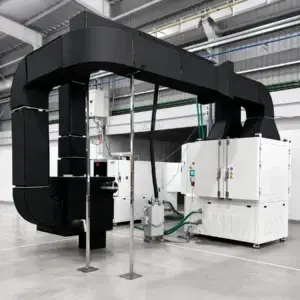
Remote Conditioning Units (RCU) – Environmental Conditioning for Large Test