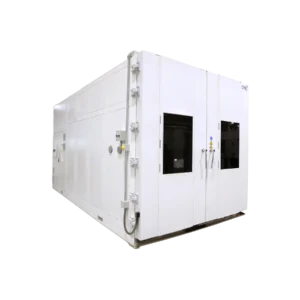
UV Preconditioning Test Chambers

Accelerated Ultraviolet Exposure Testing for PV Module Reliability. Photovoltaic (PV) modules are continuously exposed to ultraviolet (UV) radiation throughout their service life. Prolonged UV exposure accelerates degradation mechanisms such as polymer embrittlement, encapsulant discoloration, back-sheet cracking, and adhesive failure.

Standards Compliant Testing
IEC 61215 – UV Pre-Conditioning Test for PV Modules | Full-size PV modules | UV Tubes | Metal Halide

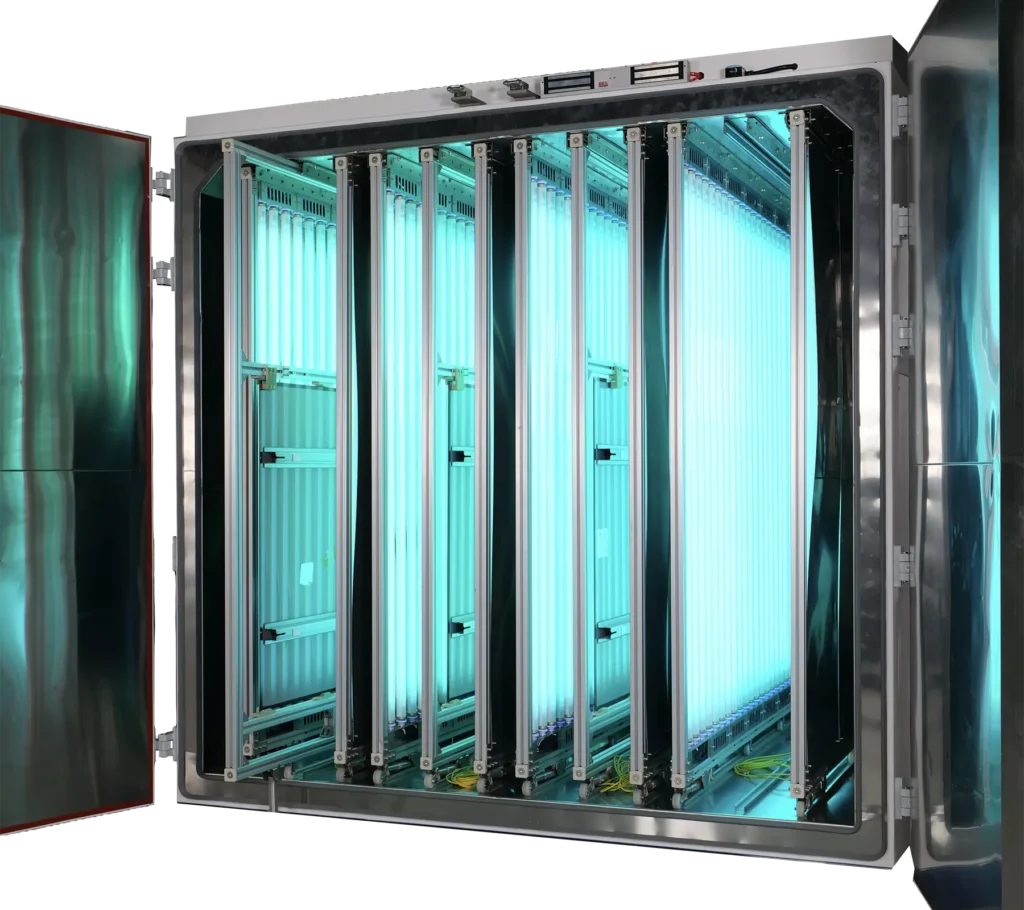
UV fluorescent lamp preconditioning chamber for photovoltaic module reliability testing

Why UV Preconditioning Is Critical for PV Module Qualification

Innovation Rooted in Engineering Depth

UV preconditioning is a mandatory reliability test to evaluate material stability and long-term performance of PV modules before subsequent environmental stress testing.

Purpose-Built UV Preconditioning Chambers for PV Testing

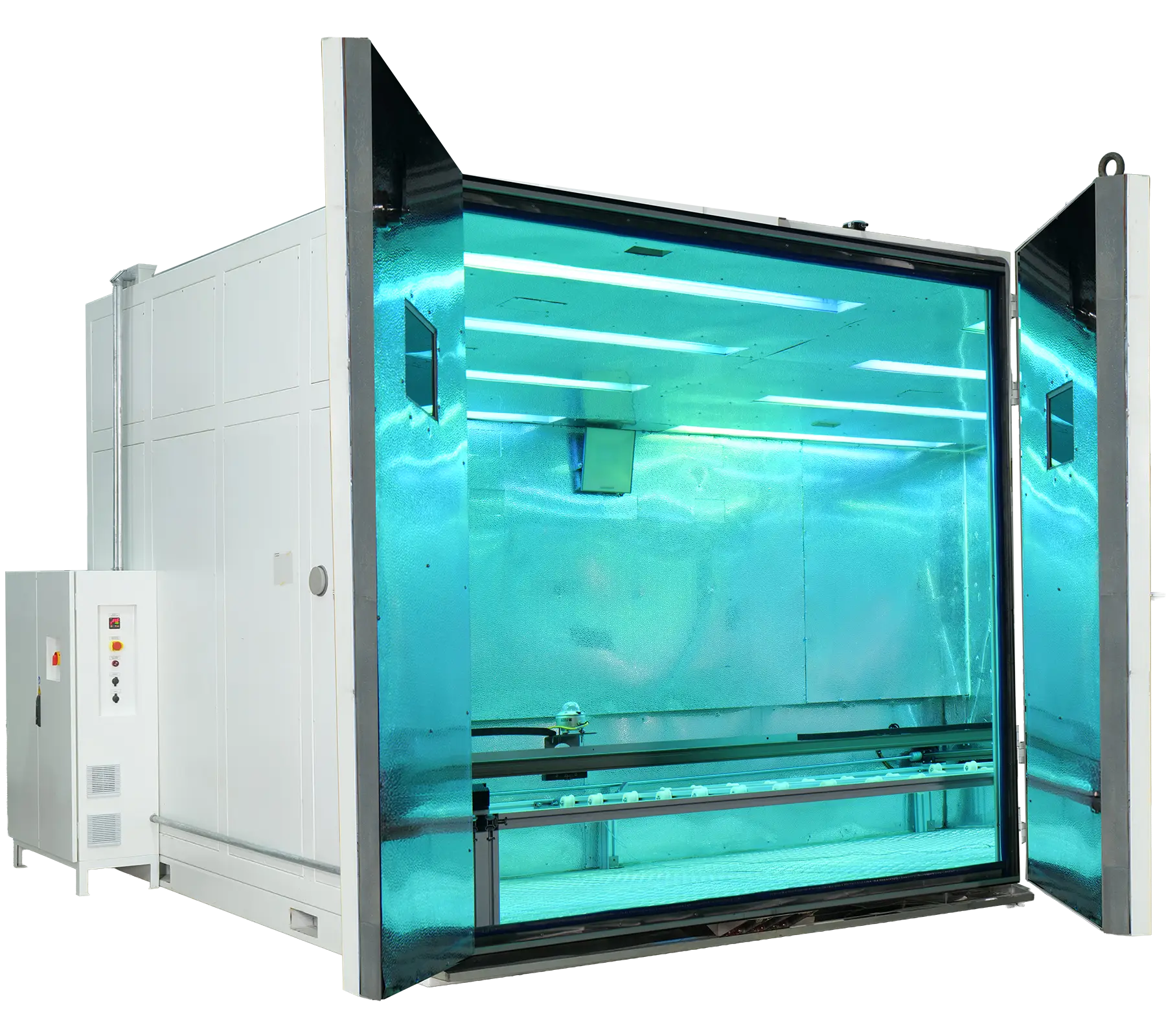
CME UV Preconditioning Test Chambers are engineered specifically for large-area PV modules and uniform UV exposure as required by international standards.
These systems ensure controlled irradiance levels, spectral accuracy, and repeatable exposure conditions critical for meaningful PV reliability assessment.

Compliance with Global PV Testing Standards

  • IEC 61215 – UV Preconditioning Test
  • IEC 61730 – Safety Qualification for PV Modules
  • UL 1703 / UL 61730
  • IS / IEC standards applicable to PV module qualification

Controlled UV Exposure and Uniformity

CME UV chambers deliver precise control of UV irradiance, exposure duration, and temperature conditions as defined in IEC standards.
Optimized lamp arrangement and reflective chamber design ensure uniform UV exposure across the entire surface of the PV module.

Typical PV Testing Applications

  • PV module qualification and certification testing’
  • Encapsulant, backsheet, and polymer material evaluation
  • Reliability and lifetime assessment
  • Failure analysis and design validation
  • R&D testing for advanced PV materials

Prepare for IEC PV Module Qualification

Configure thermal cycling, humidity freeze, damp heat, and UV preconditioning systems.

Model MWC9500UV MWC15KUV
Test Space Dimension
in mm (WxDxH)
1400 x 2900 x 2350
2250 x 2900 x 2350
in inches (WxDxH)
55 x 114 x 93
89 x 114 x 93
Test Space Volume
in Ltrs
9500
15000
in Cu.ft
336
530
Temperature Range
°C
60
°F
140
No. of Panels
No.
2
Type of Panels
Mono-facial
Bi-facial

Why Choose CME for UV Preconditioning?

  • Standards compliant UV preconditioning performance
  • Uniform UV irradiance across large PV modules
  • Integrated temperature control and monitoring
  • Digital-first controls and test traceability
  • Strong lifecycle and service support

What is UV pre-conditioning for PV modules?

UV pre-conditioning is a test that exposes photovoltaic (PV) modules to controlled ultraviolet (UV) radiation before other environmental tests to evaluate the resistance of encapsulants, backsheets, and polymers to UV-induced degradation.

Why is UV pre-conditioning required for solar panels?

Solar modules are continuously exposed to sunlight, including UV radiation. UV pre-conditioning ensures that materials such as EVA encapsulant, backsheet, and sealants do not degrade, discolor, crack, or lose adhesion over time.

Which standard specifies UV pre-conditioning?

UV pre-conditioning is defined in IEC 61215 as part of the environmental qualification sequence for crystalline silicon and thin-film PV modules.

What is the purpose of performing UV exposure before other tests?

UV exposure accelerates aging of polymeric materials. Performing UV pre-conditioning before tests like thermal cycling or humidity freeze helps simulate real-world aging and reveals weaknesses that may not appear otherwise.

What wavelength range is used in UV testing?

UV pre-conditioning typically uses radiation in the 280 nm to 400 nm wavelength range, simulating the ultraviolet portion of natural sunlight.

How much UV exposure is required under IEC standards?

IEC 61215 specifies a minimum UV dose (measured in kWh/m²) that the module surface must receive. The exact dosage requirement is defined in the latest version of the standard.

What types of degradation can UV exposure cause?

UV radiation can cause encapsulant yellowing, loss of transparency, backsheet cracking, adhesive failure, delamination, and reduction in electrical insulation performance.

What equipment is used for UV pre-conditioning?

UV weathering chambers equipped with calibrated UV lamps and irradiance control systems are used. These systems ensure uniform UV exposure across the module surface.

Is temperature controlled during UV pre-conditioning?

Yes. Temperature is typically monitored and controlled to prevent overheating while maintaining realistic exposure conditions as defined by the test standard.

How long does UV pre-conditioning take?

The duration depends on the required UV dosage and chamber irradiance intensity. It may take several days to a few weeks to achieve the specified cumulative UV exposure.

What is the difference between UV testing and full weathering tests?

UV pre-conditioning focuses specifically on ultraviolet radiation exposure, while full weathering tests may combine UV, humidity, temperature cycling, and water spray to simulate broader environmental conditions.

Solar & Photo Voltaic Modules

Walk-in temperature humidity chamber for environmental simulation testing

Humidity Freeze Test Chambers

Humidity Freeze Test Chambers Accelerated Reliability Testing for PV Modules Under Moisture and Freezing Stress. Photovoltaic (PV) modules deployed in real world environments are exposed to cycles of high humidity

Read More
Walk-in damp heat test chamber for IEC 60068 high temperature and humidity environmental testing

Damp Heat Test Chambers

Damp Heat Test Chambers Long-Term Humidity Reliability Testing for PV Modules and Electronic Systems. Damp heat testing exposes products to prolonged high temperature and high humidity conditions to accelerate aging

Read More
Walk-in thermal cycling test chamber for environmental reliability testing of components and systems

Thermal Cycling Test Chambers

Thermal Cycling Chambers for PV Module Testing Accelerated Reliability Testing for Solar Modules Under Extreme Thermal Stress, Photovoltaic (PV) modules are exposed to repeated temperature fluctuations over their operational life,

Read More
Scroll to Top