


Benchtop Solar Simulator
Compact, High-Fidelity Sun Simulation for Laboratory and R&D Applications – Early-stage photovoltaic research, material development, and component-level testing require compact solar simulation systems that deliver high spectral accuracy, stable irradiance, and repeatable results within a laboratory-friendly footprint.
Sunirad A-22 is certified to IEC 60904-9:2020
ASTM E927-10, and JIS C-8912 standards.

Compact Solar Simulation for Precision Laboratory Testing
Innovation Rooted in Engineering Depth
Powered by Lumartix Switzerland’s patented solar simulation technology, CME Benchtop Solar Simulator Chambers are engineered and manufactured to the highest industrial standards and delivering precision spectral accuracy
Lumartix Solar Technology Integrated by CME
High-Fidelity Solar Spectrum in a Compact Form
Lumartix solar simulation technology delivers excellent spectral match to natural sunlight, with high spatial uniformity and temporal stability.
Integrated into CME chambers, these systems support precise irradiance control for laboratory-scale PV cells, mini-modules, and material samples.
Compliance with Solar Measurement Standards
- IEC 60904 – Photovoltaic device measurement
- ASTM E927 / ASTM E973
- ISO and laboratory solar testing standards
- Research and R&D validation protocols
Typical Applications
- PV cell and mini-module testing
- Material and coating evaluation under solar exposure
- Spectral response and IV characterization
- R&D testing for next-generation PV technologies
- Academic and industrial research laboratories
Replicate Full-Spectrum Solar Exposure
Design high-fidelity sun simulation systems with CME and Lumartix Switzerland.
| Sunirad A-22 | Specification | ||||||||
|---|---|---|---|---|---|---|---|---|---|
|
Sample Type |
Mono and polycrystalline silicon solar cells, thin film, multi-junction, organic, perovskite, and DSSC photovoltaic devices |
||||||||
|
Sample Area |
220 x 220 mm illuminated area |
||||||||
|
Light Intensity |
Adjustable between 50 to 1'300 W/m2 intensity (50 - 200 W/m2 with neutral filter option) |
||||||||
|
Light Source |
Class A+ Lumixo-CORE light engine |
||||||||
|
Lamps Lifetime |
40'000 hours, serviceable system |
||||||||
|
Spectrum |
Class A+ or A as per IEC 60904-9:2020 ed.3 |
||||||||
|
Illumination Non-Uniformity |
±1% over 220 x 220 mm (Class A) |
||||||||
|
Irradiance Stability |
<2% (Class A as per IEC 60904-9:2020 ed.3) |
||||||||
|
Sample Holder Temperature |
Adjustable, 20°C to 60°C |
||||||||
|
Light Engine Cooling |
Forced air cooling |
||||||||
|
Software |
Lamp control, light intensity on fly |
||||||||
|
Dimensions |
L474 x W850 x H1235 mm (sample holder open) |
||||||||
|
Mass |
~25 kg |
||||||||
|
Structure |
Anodized aluminum |
||||||||
|
Electromagnetic Compatibility |
2.45 GHz ISM Group 2, Class B Device (CISPR 11) |
||||||||
|
RoHS Conformity |
Yes |
||||||||
|
CE Conformity |
Yes, the entire system complies with the CE regulations; the system is intended for industrial or laboratory use |
||||||||
Standalone, Plug-and-Play Configuration
CME benchtop solar simulation systems are delivered as standalone units with integrated chamber, solar source, controls, and safety systems.
Options include temperature control, sample mounting fixtures, electrical feedthroughs, and data acquisition interfaces.
Why Choose CME Benchtop Solar Simulator Chambers?
- Swiss solar simulation technology from Lumartix
- Compact, enclosed, and environmentally controlled design
- High spectral accuracy and irradiance stability
- Digital-first controls and laboratory traceability
- Strong lifecycle and service support
Also Known As
- Benchtop Solar Simulator
- Laboratory Sun Simulator
- Solar Simulator Chamber
- Compact PV Test Chamber
- Standalone Solar Simulation System
What is a Solar Simulation Chamber?
A Solar Simulation Chamber, also known as a Sun Simulator, is a test system designed to replicate natural sunlight under controlled and repeatable laboratory conditions. These chambers simulate solar irradiance, spectrum, and intensity to evaluate product performance under solar exposure.
What are Solar Simulation Chambers also known as?
Solar Simulation Chambers are also referred to as Sun Simulators, Solar Radiation Test Chambers, or Solar Exposure Test Chambers, depending on the application and standards involved.
What is the difference between a Sun Simulator and a Solar Radiation Chamber?
A Sun Simulator focuses on accurate spectral and irradiance replication of sunlight, while a Solar Radiation Chamber may simulate heat load and UV exposure without full spectral accuracy. CME systems are designed to deliver true solar simulation through advanced light source technology.
Which applications require Solar Simulation Chambers?
Solar Simulation Chambers are used for photovoltaic module testing, automotive components, aerospace materials, electronics, coatings, plastics, and outdoor equipment exposed to solar radiation.
Which standards are supported by Solar Simulation Chambers?
CME Solar Simulation Chambers are designed to support standards such as IEC 61215, IEC 61730, IEC 60904, ASTM G155, ISO 4892, MIL-STD-810 Method 505, and automotive OEM solar load specifications.
How are CME Solar Simulation Chambers different from basic solar test systems?
CME Solar Simulation Chambers are developed in partnership with Lumartix Switzerland, combining high-fidelity solar simulation technology with CME’s environmental chamber engineering and digital control platform.
Can Solar Simulation be combined with temperature and humidity control?
Yes. CME offers combined Solar Simulation and Environmental Test Chambers, enabling simultaneous control of solar radiation, temperature, and humidity for realistic test conditions.
What light source technology is used in CME Solar Simulation Chambers?
CME Solar Simulation Chambers utilize advanced plasma technologies developed with Lumartix Switzerland to achieve stable irradiance, spectral accuracy, and long-term reliability.
How is test control and data logging managed?
All CME Solar Simulation Chambers are powered by the enviCoM® 4.0 controller, providing synchronized control of solar irradiance and environmental parameters, secure data logging, and exportable test reports.
Can Solar Simulation Chambers be customized?
Yes. CME Solar Simulation Chambers can be customized for test area size, irradiance level, spectral class, uniformity requirements, integration with environmental chambers, and application-specific fixtures.
What service and lifecycle support is available?
CME provides full lifecycle support through Levito, including installation, commissioning, calibration coordination, preventive maintenance, and long-term service support.
How do Solar Simulation Chambers fit into CME’s renewable and environmental testing portfolio?
Solar Simulation Chambers complement CME’s PV qualification chambers, environmental test systems, and combined stress platforms, enabling complete solar and outdoor exposure testing solutions.
Solar Radiation Chambers
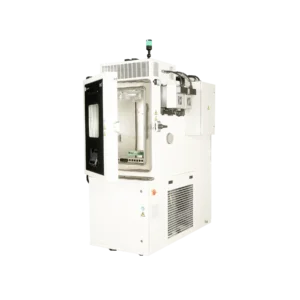
Solar Radiation Chambers
Solar Radiation Chambers Integrated Sun, Temperature, and Humidity Simulation for Real-World Solar Reliability Testing – Real-world solar installations experience simultaneous exposure to sunlight, temperature variation, and humidity—not isolated test conditions.