


Remote Conditioning Units (RCU) - Environmental Conditioning for Large Test Spaces, Dynamometers, and Specialized Test Applications
Environmental test chambers are not always practical for large test specimens, dynamometers, battery packs, vehicle components, or specialized test rooms. CME’s Remote Conditioning Units (RCU) provide precise temperature, humidity, and airflow conditioning by generating controlled environmental conditions externally and delivering conditioned air directly to the test area through insulated ducting.
Designed for automotive, aerospace, defense, electronics, EV, and industrial testing applications
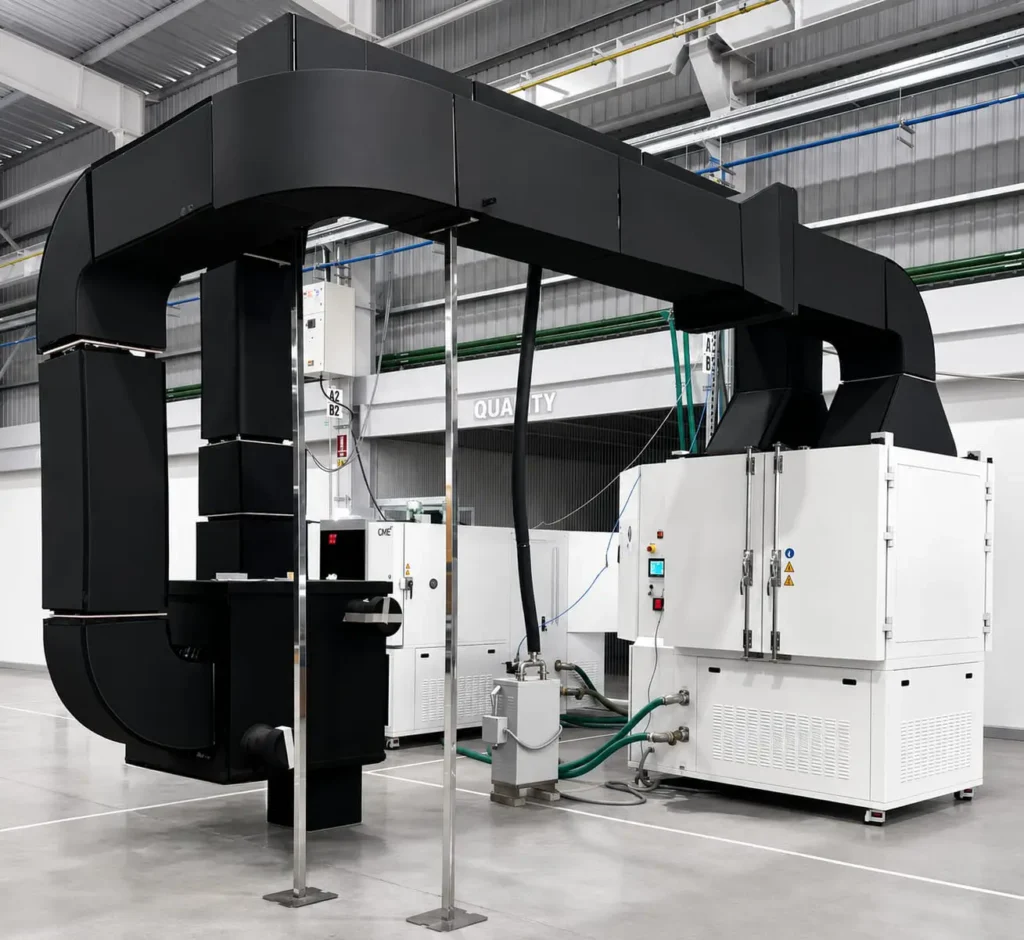
CME Remote Conditioning Units (RCU) combine advanced refrigeration technology, intelligent control systems, and configurable airflow management to create stable and repeatable test environments.
Overview
Whether you need extreme temperature conditioning, controlled humidity, high airflow simulation, or integration with existing test facilities, CME RCUs deliver reliable performance for demanding validation and qualification programs.
What is a Remote Conditioning Unit (RCU)?
A Remote Conditioning Unit (RCU) is an environmental conditioning system that generates controlled temperature, humidity, and airflow outside the test enclosure and delivers conditioned air through ducting to the test space.
Unlike conventional environmental chambers, an RCU allows the conditioning system to remain external while the test specimen remains inside a dedicated test room, dynamometer cell, acoustic enclosure, battery test room, or custom test environment.
This approach is ideal when:
- The specimen is too large for a chamber
- Existing test cells need environmental conditioning
- High airflow simulation is required
- Dynamometer testing requires conditioned intake air
- Vehicle components require controlled environmental exposure
- Acoustic test environments must remain isolated from refrigeration equipment
Key Features
Wide Temperature Conditioning Capability
CME Remote Conditioning Units are available with temperature ranges extending from:
- -60°C to +180°C*
- Stable temperature control with ±1°C fluctuation
- Excellent temperature uniformity
- Reliable long-duration operation
*Performance varies depending on model and application requirements.
Integrated Humidity Control
Selected RCU models support:
- 10% RH to 90% RH humidity control
- Capacitive humidity sensing
- Precise moisture management
- Automated humidity regulation
- Dynamic climatic test profiles
Ideal for environmental simulation, reliability testing, and automotive qualification programs.
Airflow and Velocity Control
RCUs can be configured for controlled airflow applications including:
- Air velocity up to 60 km/h
- Dynamometer cooling simulation
- Vehicle airflow testing
- Component thermal management studies
- Brake system validation
- Intake air conditioning
Advanced blower systems ensure consistent airflow distribution throughout the test environment.
Cascade Refrigeration Technology
For extreme low-temperature applications, CME employs cascade refrigeration systems that provide:
- Rapid pull-down capability
- Reliable sub-zero performance
- Stable low-temperature operation
- High cooling capacity
- Continuous-duty operation
Water-cooled condenser configurations are available for maximum efficiency and performance.
Intelligent Automation and Control
Why Choose an RCU Instead of an Environmental Chamber?
Greater Testing Flexibility
RCUs allow environmental conditioning of:
- Large assemblies
- Vehicle subsystems
- EV battery packs
- Brake dynamometers
- Powertrain test rigs
- Industrial equipment
- Aerospace components
without being constrained by chamber dimensions.
Lower Facility Modification Costs
Instead of building large environmental chambers, existing test spaces can be conditioned using ducted environmental control systems.
Reduced Noise in Test Areas
The refrigeration and conditioning systems remain outside the primary test environment, supporting quieter testing conditions where required.
Ready to Design Your Environmental Conditioning System?
Whether you need climatic conditioning for a dynamometer, battery test facility, environmental room, or specialized validation application, CME Remote Conditioning Units provide reliable, precise, and scalable environmental control.
Automotive Testing
- Brake dynamometer testing
- Noise dynamometer testing
- Vehicle component validation
- Thermal cycling
- Air intake conditioning
- EV component testing
Electric Vehicle (EV) Testing
- Battery pack testing
- Battery thermal management validation
- Power electronics testing
- Motor testing
- Charging system evaluation
Aerospace & Defense
- Component qualification
- Environmental simulation
- Reliability testing
- Thermal cycling
- Performance validation
Electronics & Industrial Products
- Reliability testing
- Thermal performance studies
- Environmental stress screening
- Product qualification
- Durability validation
Research & Development
- Prototype evaluation
- Climatic simulation
- Product development testing
- Custom environmental studies
CME RCUs utilize industrial-grade refrigeration systems engineered for continuous operation.
Refrigeration Features
- Cascade refrigeration options
- Eco-friendly refrigerants
- Water-cooled condensers
- Plate heat exchanger technology
- Oil management systems
- High and low-pressure protection
- Automatic safety monitoring
- On-demand cooling control
These systems are designed to deliver consistent performance while minimizing downtime and maintenance requirements.
Built for Reliability
- Industrial-grade components
- Advanced refrigeration systems
- Comprehensive safety architecture
- Proven field performance
- Global deployment capability
Automation Driven
CME systems are designed to reduce operator intervention through intelligent controls, automated test execution, and comprehensive diagnostics.
Global Support
From design and commissioning to calibration and service support, CME delivers complete lifecycle assistance for environmental testing systems.
Technical Highlights
| Parameter | Capability |
| Temperature Range | Up to -60°C to +180°C |
| Humidity Range | Up to 10% RH to 90% RH |
| Temperature Stability | ±1°C |
| Air Velocity | Up to 60 km/h |
| Refrigeration | Cascade System |
| Cooling Type | Water Cooled |
| Control Platform | Envicom™ / Watlow F4T |
| Communication | Ethernet, USB, Modbus |
| Data Logging | Standard |
| Remote Monitoring | Available |
| Test Profiles | Programmable |
| Model | Temp. Range | Ramp Rate | Humidty | Air flow |
| RCU300CFM | -50 to 180 | NA | NA | 300 CFM |
| RCU600CFM | -60 to 180 | 3oC average from -40 to 150 and vice versa | NA | 600CFM |
| RCU FOR DYNO APPLICATION | ||||
| RCUB1416HCAPAA40KMH | -25 to +40 | -25C within 2hrs @ control sensor | -15oC, 80%, -10oC, 75%, -10oC, 8%, -5oC, 30% 4oC, 80% | Air Velocity range [KMPH]: 0 to 40 Non-Controllable range [KMPH] : 0 – 20 Controllable range with cooling/heating [KMPH] : 20 – 40 Velocity Fluctuation : +2Kmph |
| RCUB1416HCAPAA60KMH6SE | -20 to +40 | -20C within 2hrs @ control sensor | Humidity range 10% – 90%RH from 10 to 40oC Humidity accuracy : +5% | Air Velocity range [KMPH] : 0 – 60 Non-Controllable range [KMPH] : 0 – 20 Controllable range with cooling [KMPH] : 20 – 60 Velocity Fluctuation : +2Kmph |
What is the purpose of a Remote Conditioning Unit?
An RCU generates controlled temperature, humidity, and airflow outside the test environment and delivers conditioned air to the test area through ducting.
What industries use RCUs?
Automotive, EV, aerospace, defense, electronics, industrial manufacturing, and research organizations commonly use RCUs.
Can RCUs provide humidity control?
Yes. Selected models support humidity control from 10% RH to 90% RH depending on the application.
Can an RCU be integrated with a dynamometer?
Yes. RCUs are widely used for brake dynamometer, noise dynamometer, and vehicle component testing applications.
Does the system support remote monitoring?
Yes. Envicom™ controllers support Ethernet connectivity, remote monitoring, data logging, and web-based access.
Can the RCU be customized?
Yes. Temperature range, airflow, humidity control, ducting configuration, refrigeration capacity, and control architecture can all be tailored to specific test requirements.
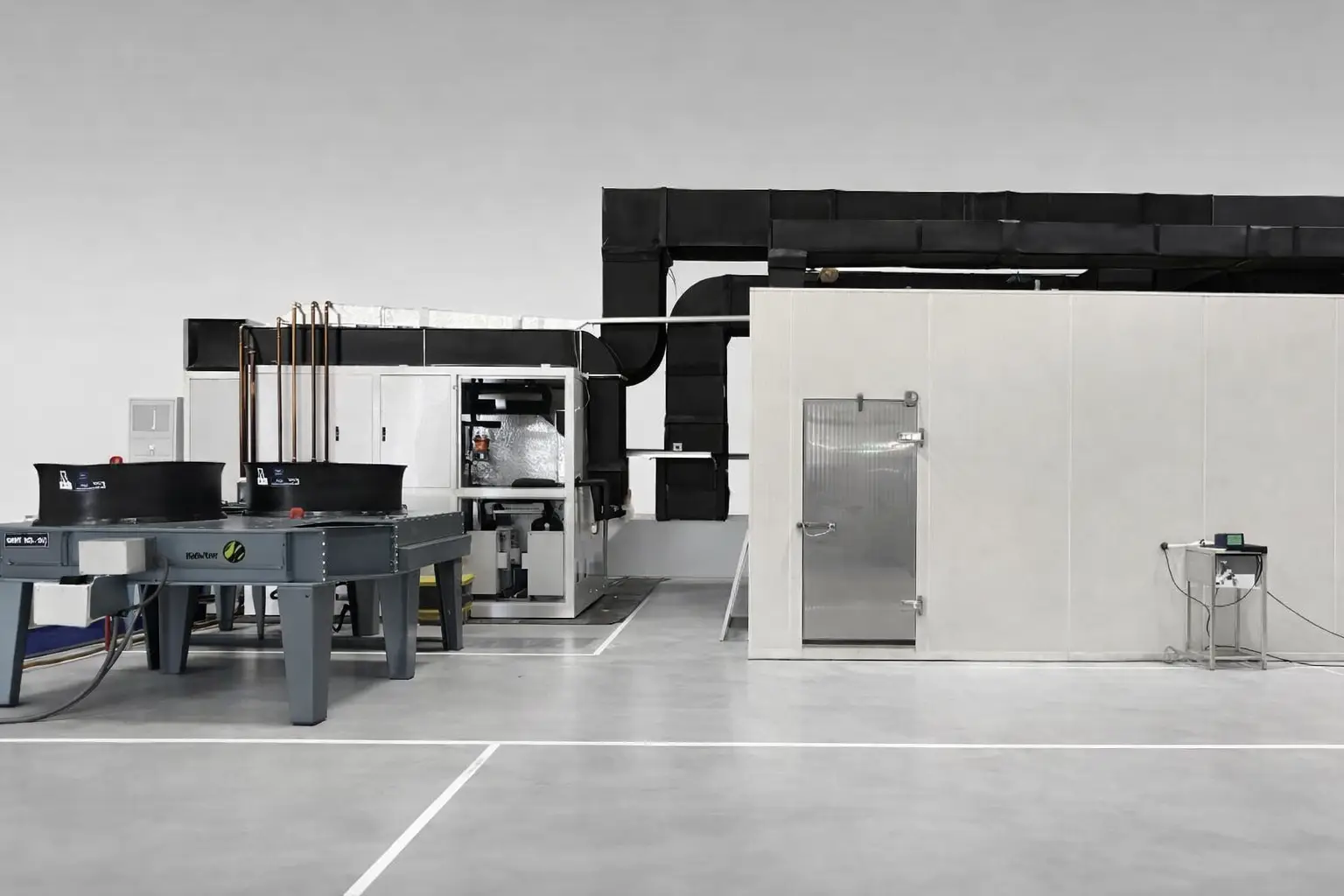
Specialized Test Systems
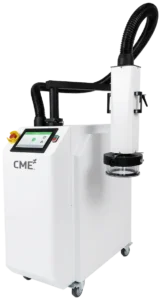
Air Stream Temperature Forcing Systems | Semiconductor Testing
Air Stream Temperature Forcing Systems for Semiconductor Testing Air Stream