Executive Summary
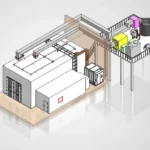
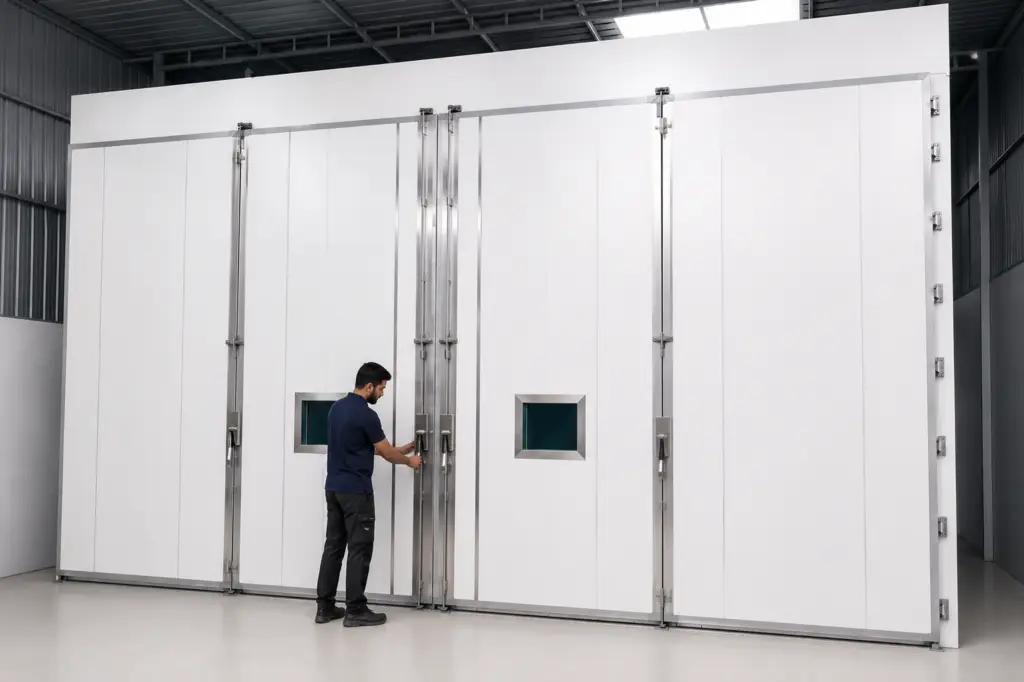
A leading independent testing laboratory required a large custom walk-in environmental test chamber capable of long-duration reliability, qualification, and compliance testing across multiple industries.
Unlike catalogue chambers, the project required complete custom engineering, precise environmental uniformity, high reliability, and integration into an operational laboratory environment.
CME designed, manufactured, installed and commissioned the complete system.
To understand the fundamentals of environmental testing, read our guide:
How Does Environmental Testing Work?
Customer
One of India’s leading environmental and product testing laboratories.
Industry:
- Third-party testing
- Product qualification
- Certification
- Reliability testing
The Challenge
The customer required a chamber that could:
- accommodate large test samples
- maintain extremely stable environmental conditions
- provide reliable long-duration operation
- meet stringent laboratory requirements
- integrate into existing facility constraints
The project required custom engineering rather than selection from an existing product catalogue.
Engineering Challenges
- chamber size optimisation
- airflow uniformity
- refrigeration sizing
- humidity distribution
- structural reinforcement
- sensor positioning
- cable port arrangement
- door sealing
- maintenance accessibility
- control system integration
Many custom projects are delayed during the quotation stage. Learn why in our article:
Engineering Considerations for Large Walk-In Chambers
Unlike standard environmental chambers, walk-in chambers present unique engineering challenges due to their significantly larger internal volumes and thermal loads. Achieving uniform environmental conditions throughout the workspace requires careful balancing of airflow distribution, refrigeration capacity, humidity generation and control algorithms.
Large test specimens absorb substantial amounts of heat and can create localised temperature gradients if airflow is not properly designed. Engineers must therefore consider diffuser placement, air return paths, fan capacity and chamber geometry to maintain consistent conditions throughout the test volume.
Long-duration qualification programmes also demand highly reliable refrigeration systems, efficient insulation and intelligent controller algorithms capable of maintaining stable conditions over days or even weeks of continuous operation.
Modern environmental chambers increasingly incorporate PLC-based automation, remote monitoring and data logging to simplify operation while providing complete traceability for laboratory quality systems.
CME Solution
- Fully customised Walk-In Chamber
- Temperature Range
- Humidity Control
- PLC / enviCoM controller
- Data logging
- Safety interlocks
- Remote monitoring
- Multi-point sensing
- Stainless steel construction
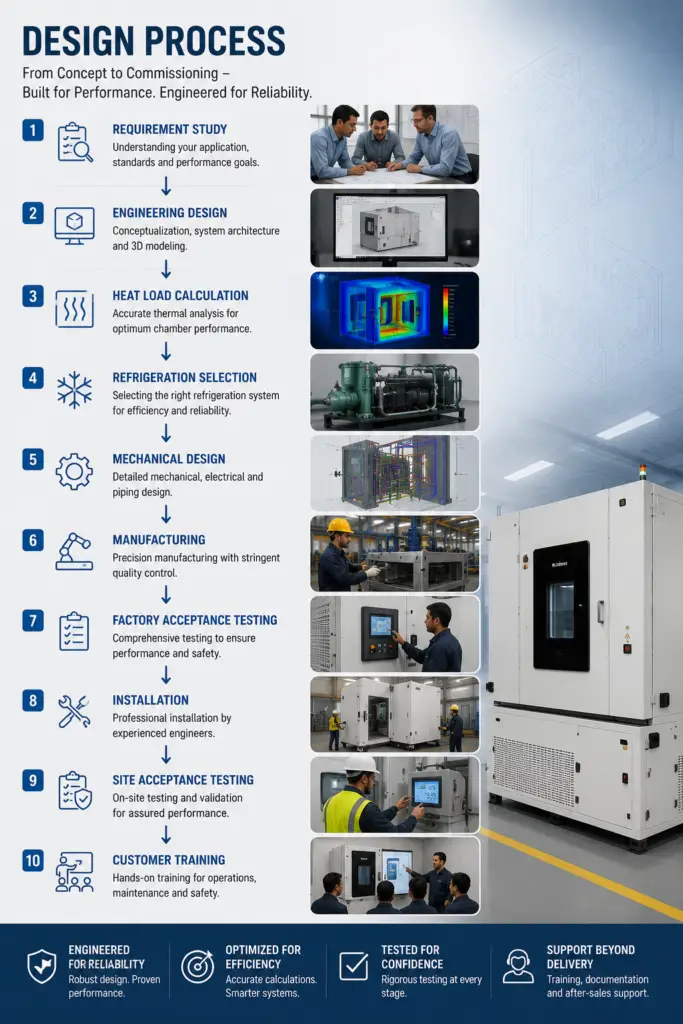
See how CME automates engineering calculations, technical specifications and quotations in our white paper:
Digital Sales Engineering for Environmental Test Chambers
Key Features
- Custom dimensions
- High airflow uniformity
- Precision temperature control
- Precision humidity control
- Long duration reliability
- User-friendly controller
- Safety protection systems
- Remote monitoring capability
Outcome
The chamber successfully met the customer’s operational requirements and now supports ongoing environmental qualification testing for multiple industrial sectors.
Why this Project Matters
This project demonstrates CME’s ability to engineer custom environmental testing systems rather than simply manufacture standard products.
It highlights capabilities across:
- Mechanical Engineering
- Refrigeration Engineering
- Control Systems
- Digital Engineering
- Manufacturing
- Installation
- Validation
International Standards Supported
Although every project has unique requirements, custom walk-in environmental chambers are commonly designed to support qualification testing performed in accordance with standards including:
- IEC 60068 Environmental Testing
- ISO 16750 Road Vehicles – Environmental Conditions and Testing
- MIL-STD-810 Environmental Engineering Considerations
- RTCA DO-160 Environmental Conditions for Airborne Equipment
- JEDEC Reliability Standards for Electronics
These standards define environmental test methods used across automotive, aerospace, defence, electronics and industrial sectors to evaluate product reliability under controlled laboratory conditions.
External links
- https://www.iec.ch
- https://quicksearch.dla.mil (MIL-STD-810)
- https://www.rtca.org
- https://www.jedec.org
Related Reading
- How Does Environmental Testing Work?
- Why Environmental Test Chamber Quotations Take Weeks
- Digital Sales Engineering for Environmental Test Chambers (White Paper)
- Reach-In vs Walk-In Environmental Test Chambers
Ready to experience Digital Sales Engineering?
Book a live demonstration of CME Sales Tools and discover how engineering calculations, technical specifications and quotations can be generated in minutes.